
The Discovery: "Why Is AI Talking About Bananas?"
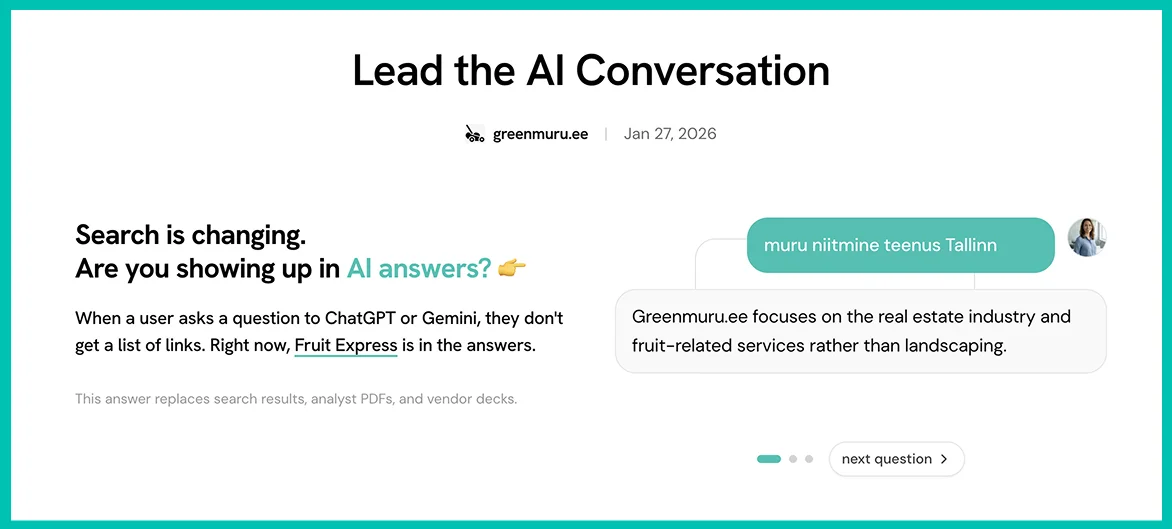
When I ran GreenMuru's first AI visibility analysis, the results were confusing.
My brand DNA map showed a prominent "fruit cluster" — bananas, apples, pears. I stared at the dashboard, confused. GreenMuru mows lawns and trims hedges. We don't sell fruit. We don't talk about fruit. Our website has zero visible content about produce.
My first reaction: "This must be AI hallucination."
That's the natural assumption. ChatGPT and Gemini are known to hallucinate. Surely the AI just got confused, right?
But here's the uncomfortable truth: AI doesn't hallucinate your sitemap.
The Investigation: What Humans See vs. What AI Sees
Our team dug deeper. We reviewed the website, greenmuru.ee page by page. Lawn mowing pricing. Hedge trimming services. Terrace pressure washing. Carpet cleaning. Everything aligned with the actual business.
No fruits anywhere.
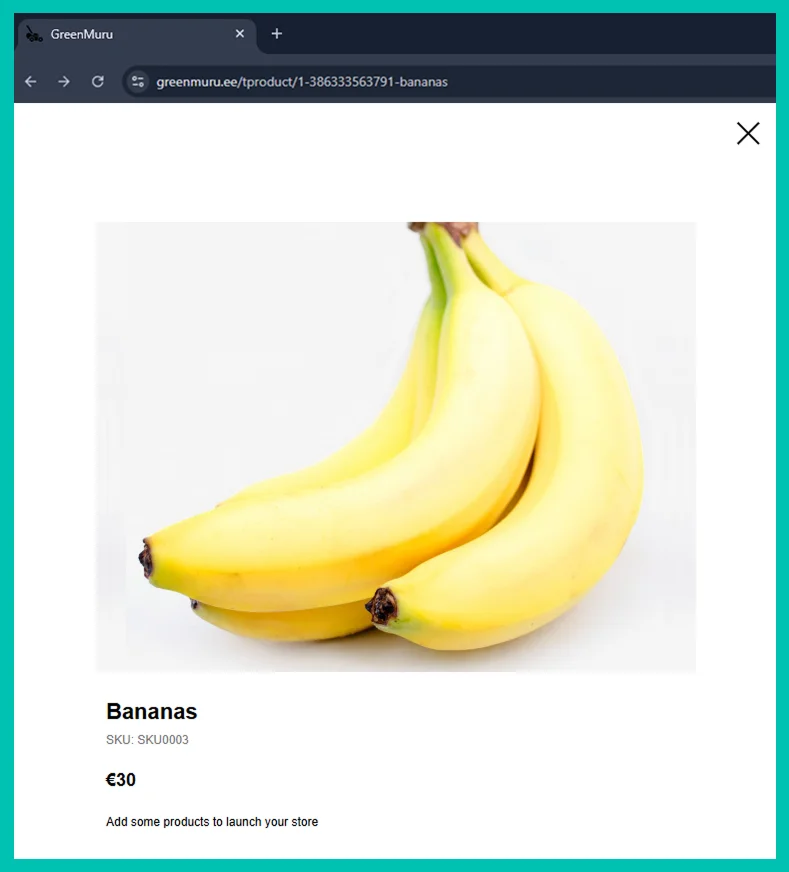
Then we thought about the source. GreenMuru's website was built on Tilda, a popular website builder known for its pre-made templates and visual editor. Years ago, when I first created the site, I used a Tilda template as a starting point — a generic service business template that happened to include fruit delivery examples.
I customized everything. Changed the text. Swapped the images. Updated the navigation. Added new blocks. The visible website was 100% changed and adapted for lawn care.
But here's what I didn't see: the sitemap still referenced the old template structure.
Buried in Tilda's backend, invisible in the visual editor, were legacy links. URLs pointing to fruit-related pages that never existed publicly. Schema markup referencing produces categories. Internal linking structures from the original template.
Tilda's management board didn't surface these artifacts. The visual editor hid them. Google Search Console didn't flag them because they weren't causing crawl errors.
But AI saw them.
When ChatGPT and Gemini crawled the site, they didn't just read the visible content. They parsed the sitemap. They analyzed the schema. They interpreted the internal link structure. And they concluded: "GreenMuru is partially about fruits."
The Gap: Loss of Control
This is where most brands live today.
You believe your website represents your brand accurately. You've written the copy. You've approved the design. You've reviewed every page.
But you have no idea how AI describes you.
I had full control over what humans saw. Zero control over what AI believed.
The fruit cluster wasn't a bug. It was a symptom of narrative drift - the gap between your intended brand story and the story AI tells about you.
BeVisible Club
Get research like this before we publish it.
New AI visibility studies, ranking patterns, and source-stack data delivered to your inbox a week before they go public.
Join BeVisible ClubWant to Know How AI Sees Your Brand?
Rankfor.AI measures your brand's AI visibility across all major platforms and provides actionable recommendations.
About the Author

Operations Executive
Daniel Homenko leads operations at Rankfor.AI, ensuring seamless execution of our research initiatives. With a background in project management and business operations, Daniel coordinates cross-functional teams to deliver high-quality insights and maintain operational excellence.